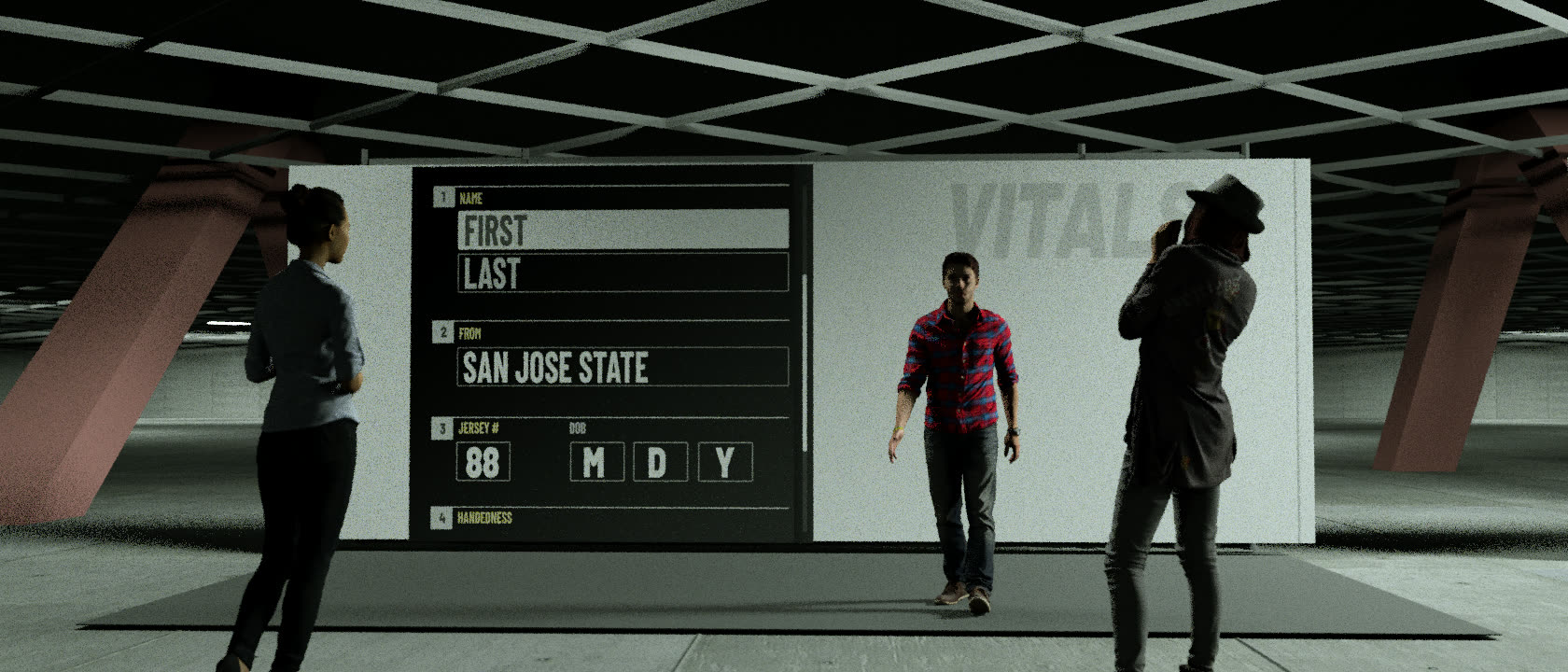
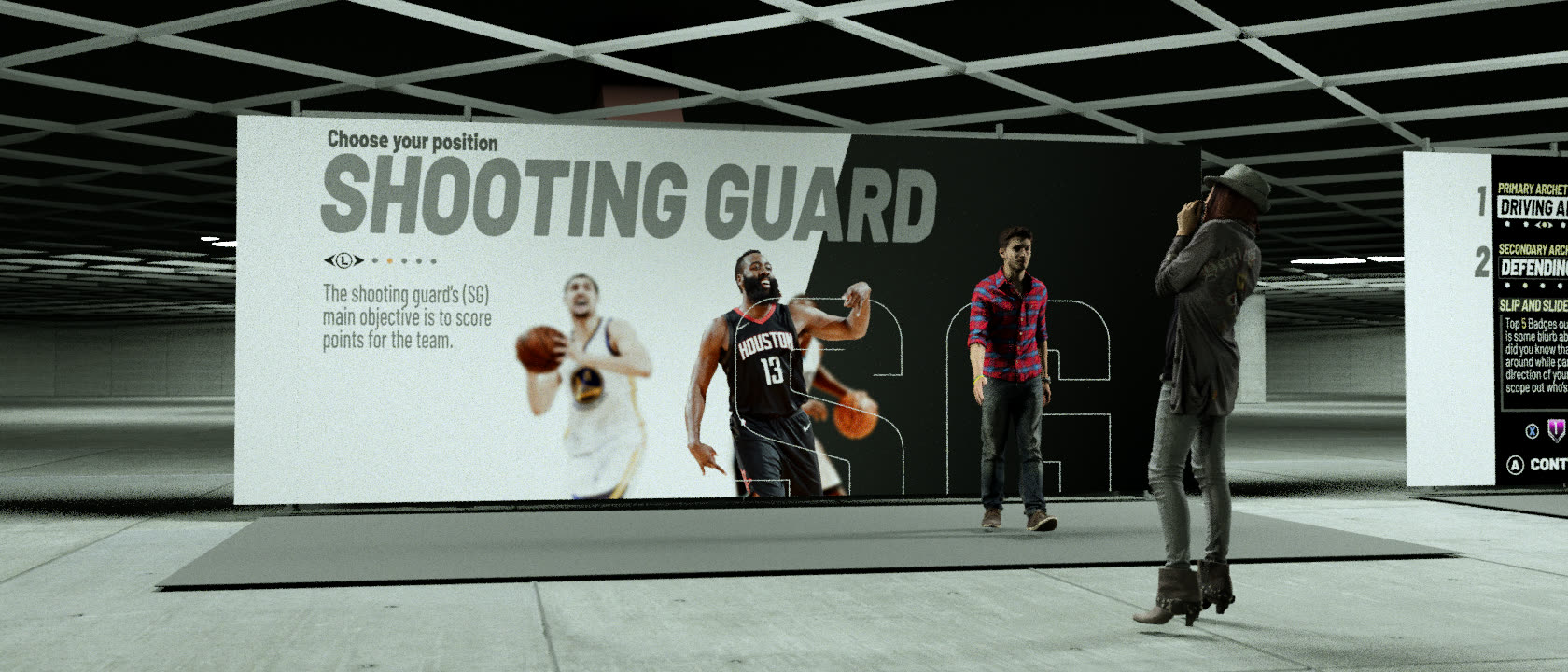
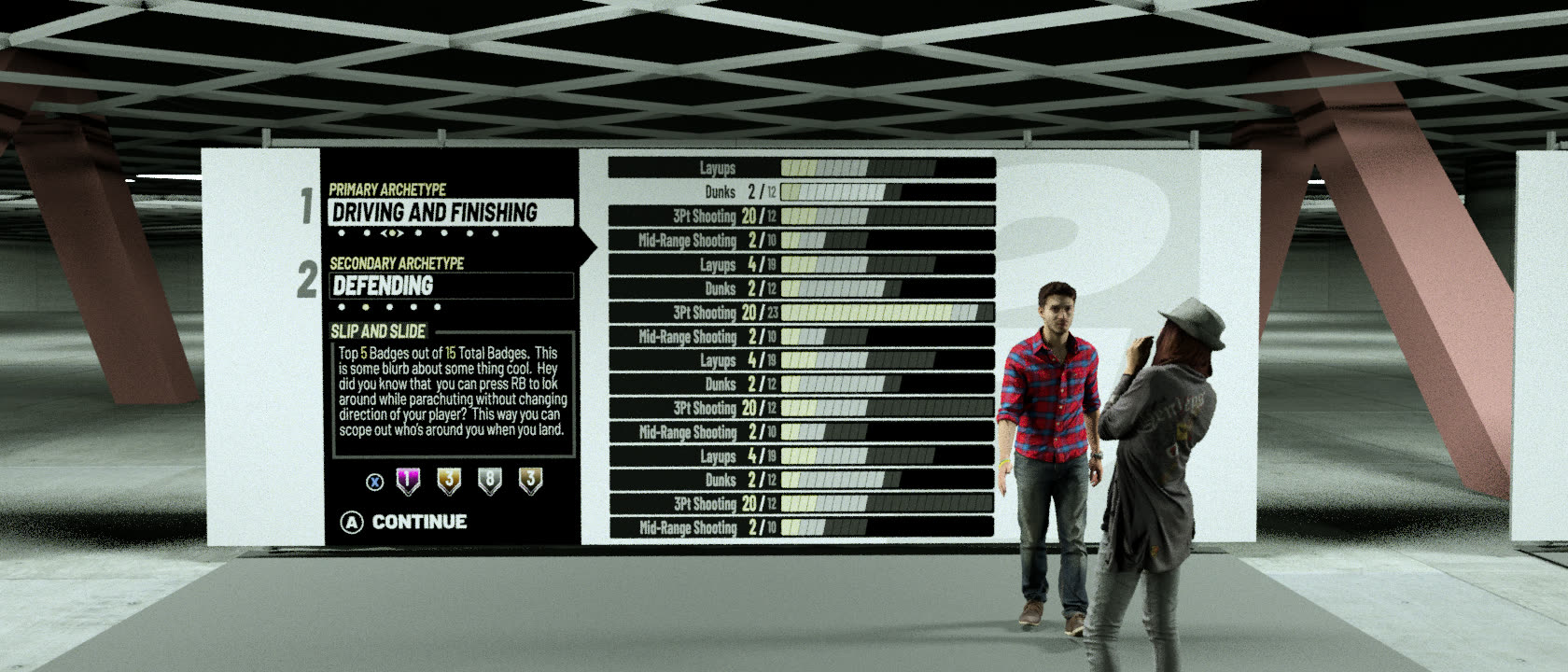
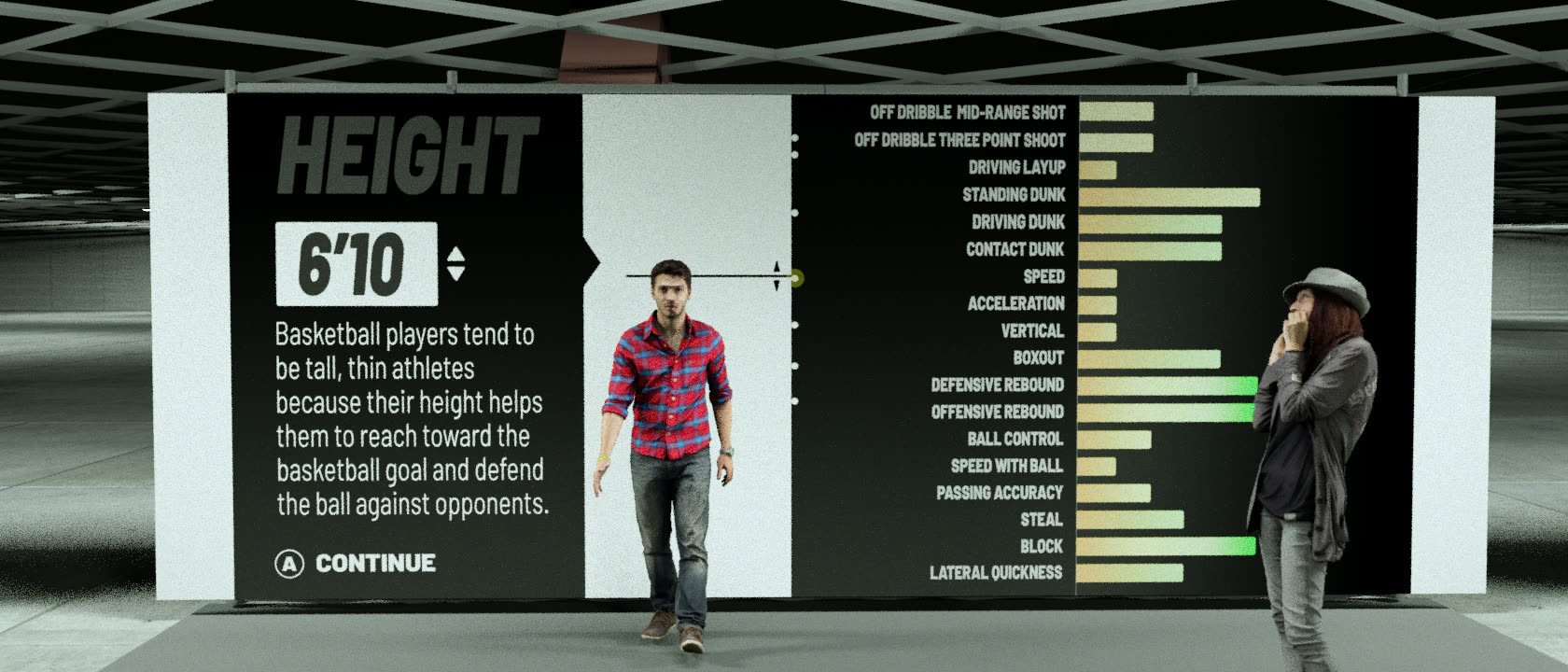
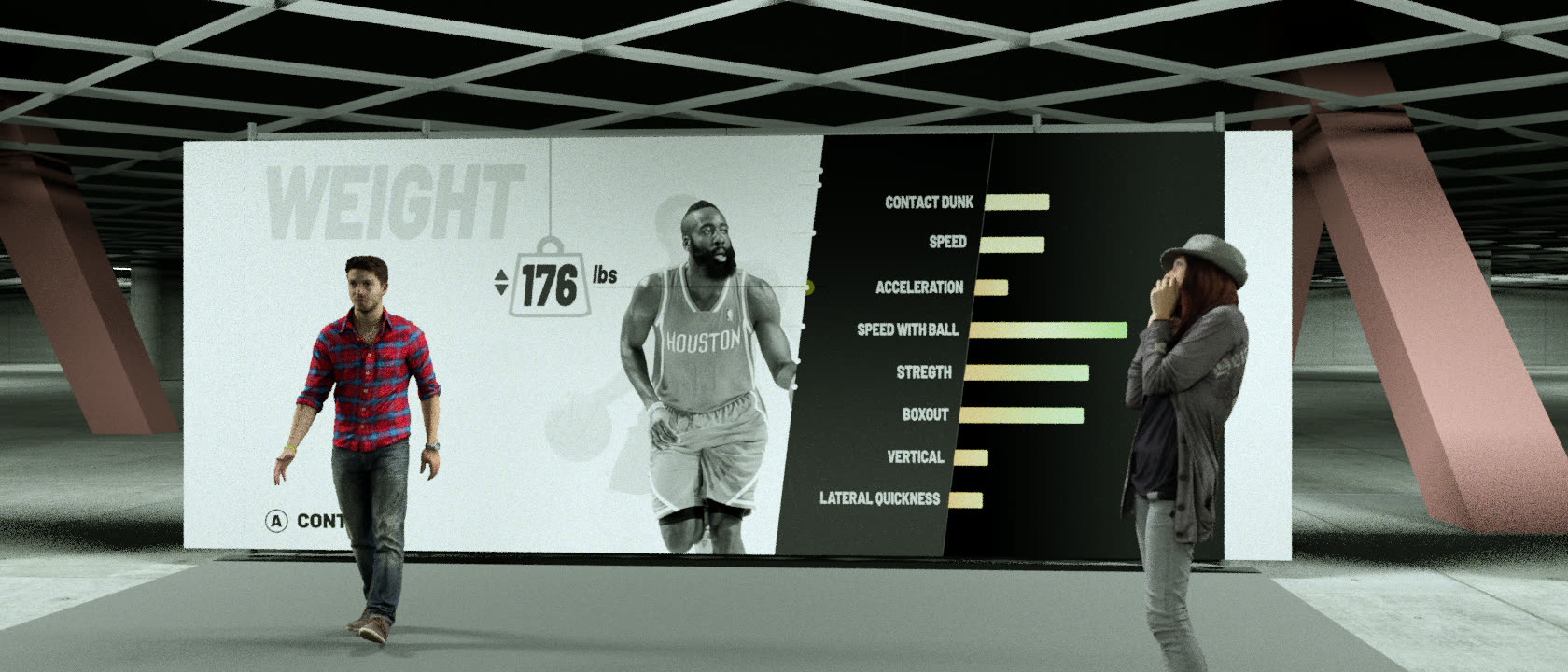
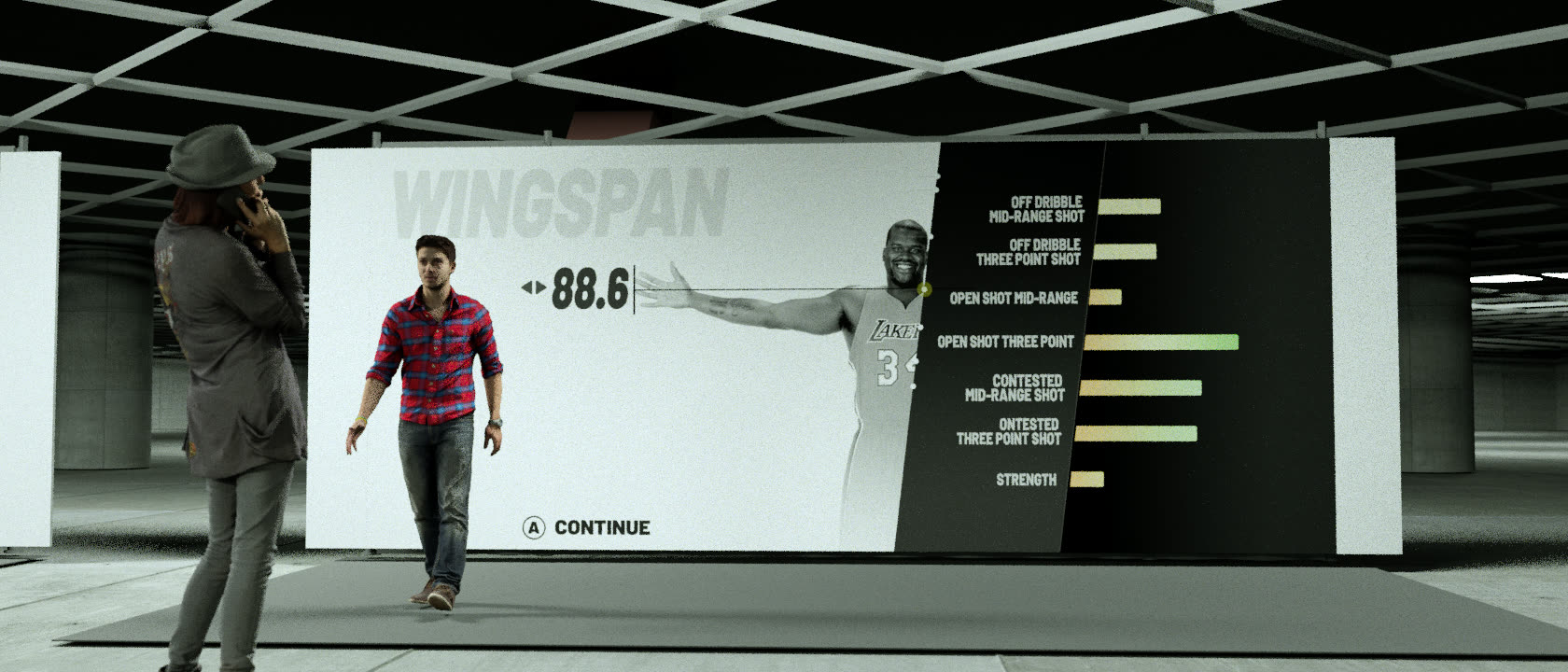
Every NBA 2K before 2K19 put its character creation in a void — floating menus over a black screen, attributes as numbers, choices without context. I wanted to change that from first principles. The player shouldn't fill out a form. They should walk into a room.
01 — Previz — Initial Concept & UX Design Pitch
The previz was built entirely by hand — no borrowed assets, no placeholder renders. I modelled and lit the environment stage in-engine from scratch, established the camera language, and authored every UI state to demonstrate how the diegetic flow would work in practice. It was a pitch as much as a prototype: the goal was to prove that a character creation system could exist entirely within a three-dimensional world and still be faster, clearer, and more emotionally resonant than anything that came before it.
The core UX idea was simple but radical for the franchise: every choice the player makes — face scan, body type, position, archetypes — is presented as an interaction with the physical space around the athlete. Panels emerge from the environment. Selections cast light on the player model. The world responds to your decisions. You are never pulled out to a menu. You are always in the room.
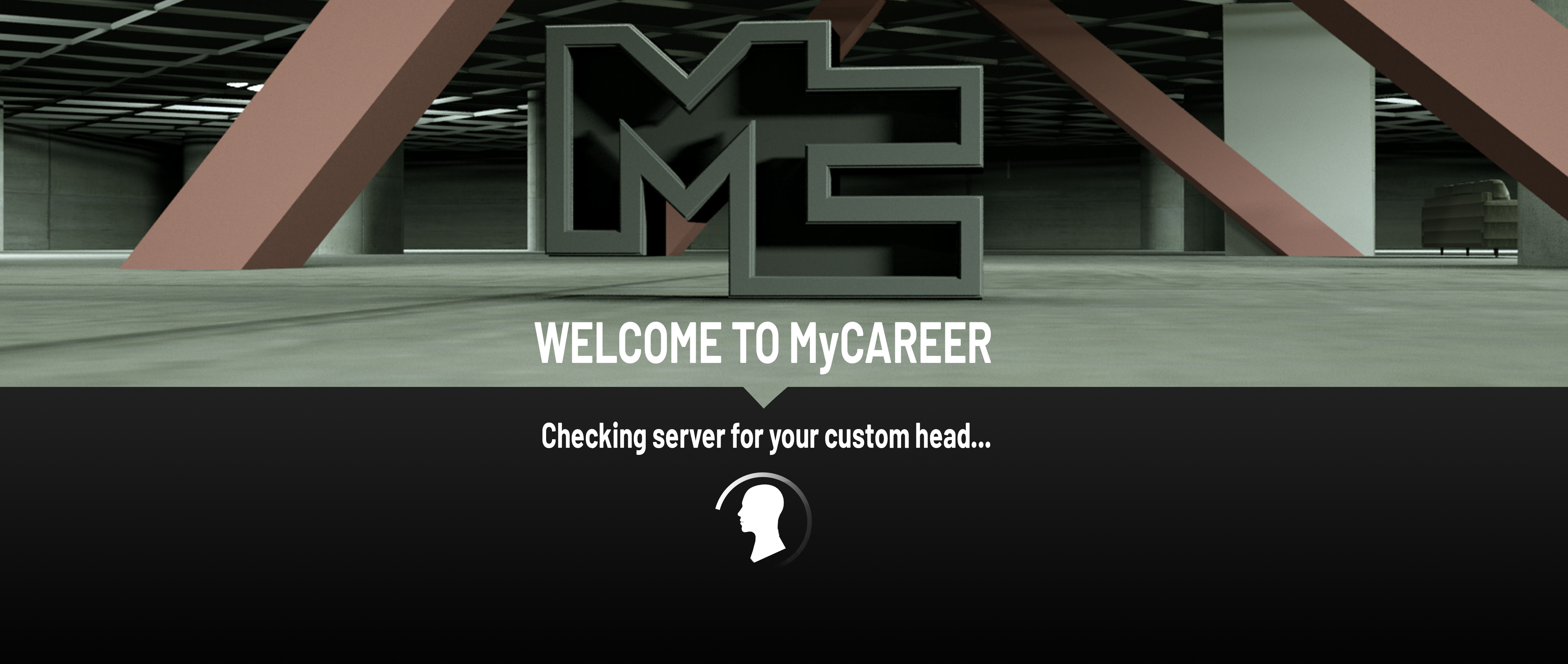
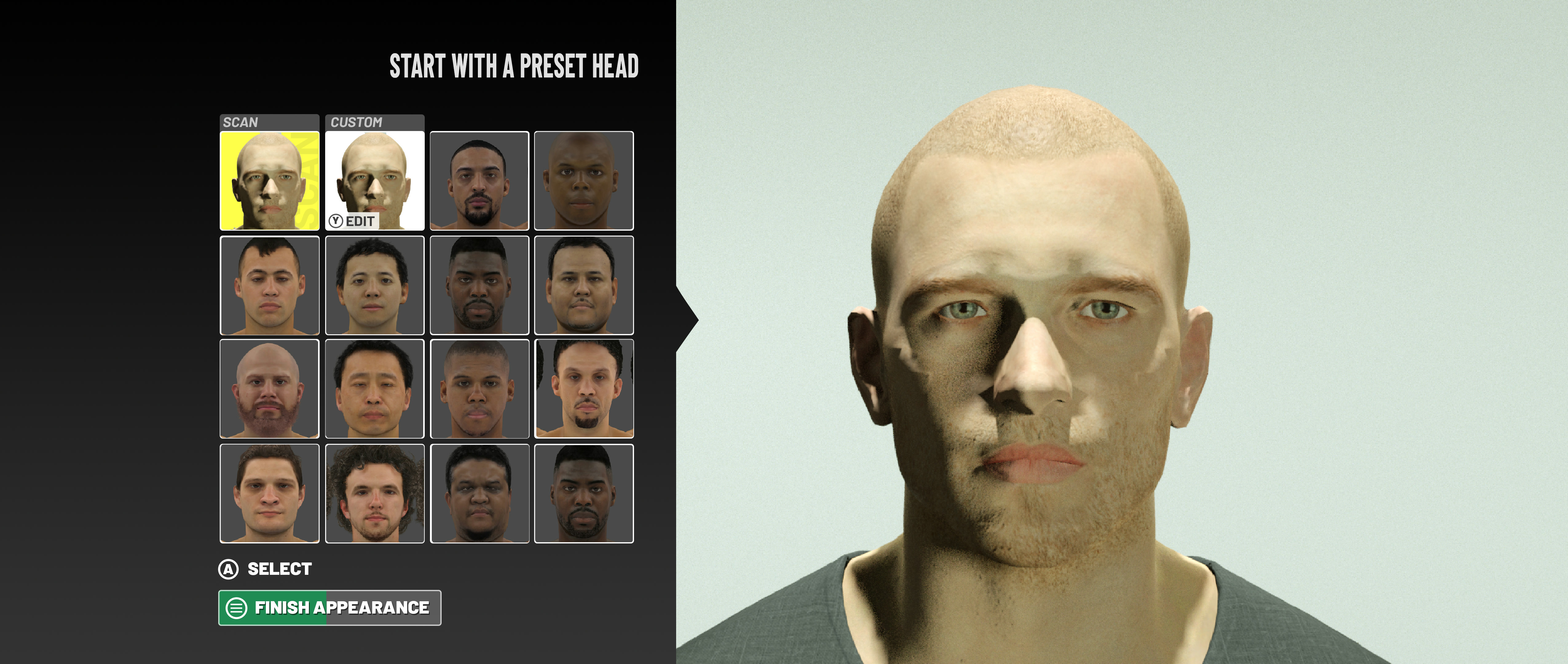
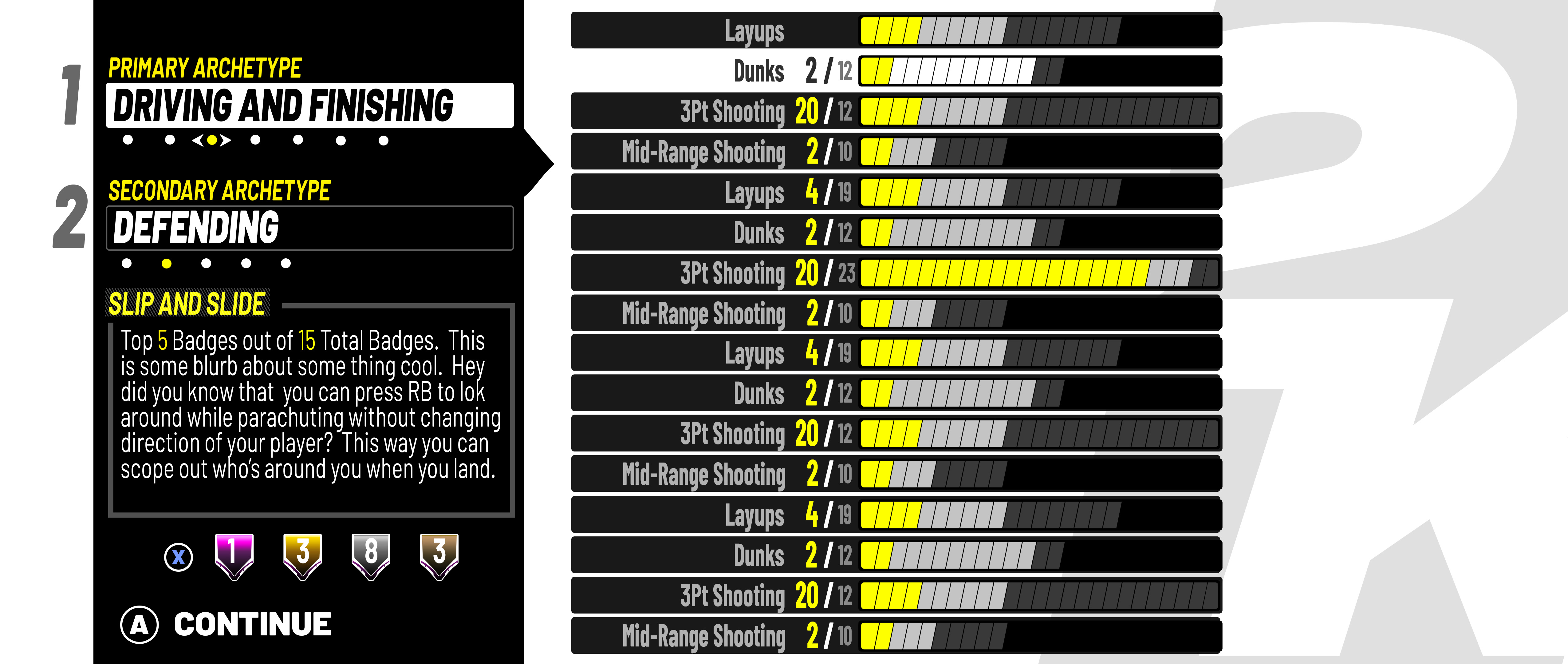
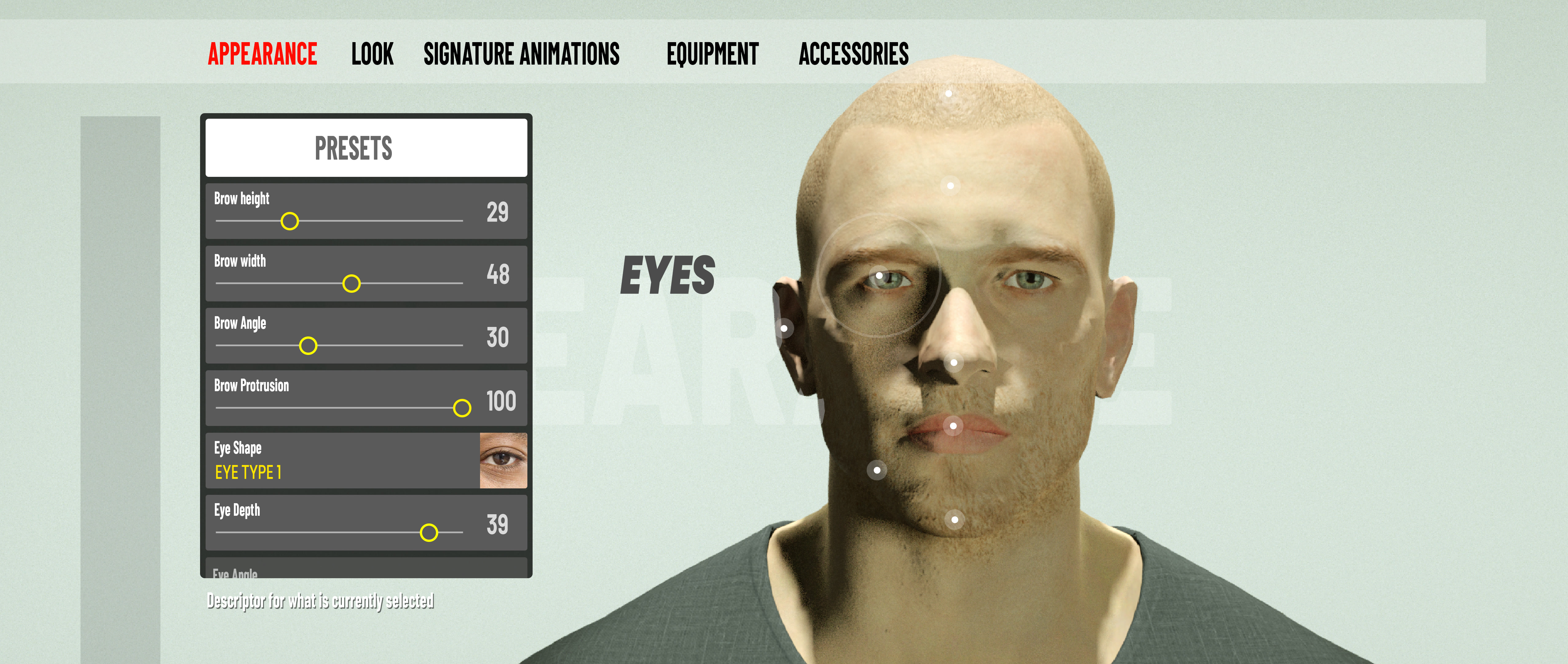
02 — Flow Screens — Face Scan / Head Picker / Archetype / The Lab
The flow was structured as a progression through the physical space: the player enters to a face scan stage, moves through physical attribute selection, is guided toward position and archetype, and finishes in The Lab — a dedicated space for fine-tuning the build. Each screen maintains its own environmental register while staying inside the same continuous world. Nothing teleports. Nothing breaks the fiction.
The UX architecture required solving a hard constraint: every diegetic element — the floating panels, the athlete model, the ambient lighting states — had to be authored inside the game engine rather than as pre-rendered video. That meant working directly with engineering throughout production, establishing real-time rendering budgets, and overseeing the lighting rig and shader pipeline alongside the UI layout.
03 — Final In-Game — Shipped Product
04 — Previz vs. Final — Side by Side
Previz Concept
Shipped In-Game
The previz (left) established the full concept, spatial logic, and UX flow. The shipped product (right) represents the complete production implementation — same vision, higher fidelity, fully real-time inside the game engine. The conceptual DNA held from first frame to final build.
2K19's diegetic CAP shipped as a back-of-box feature — a headline capability marketed alongside the gameplay itself. In the five years since, no subsequent 2K title has surpassed what was built here. The environment stage, the lighting philosophy, and the spatial UX logic remain the visual benchmark for the franchise.
True end-to-end work: the idea originated here, the previz was authored here, the 3D stage was built and lit here, engineering was directed and supervised here, and the final shipped experience was overseen to completion here.