
Across LEGO 2K Drive — from the postcard that papered the trailer and in-world billboards to the loading wipes that carried players between biomes — I shaped touchpoints that bridged the tactile joy of LEGO bricks with the kinetic energy of open-world racing.
01 — The Postcard
One world, one frame.
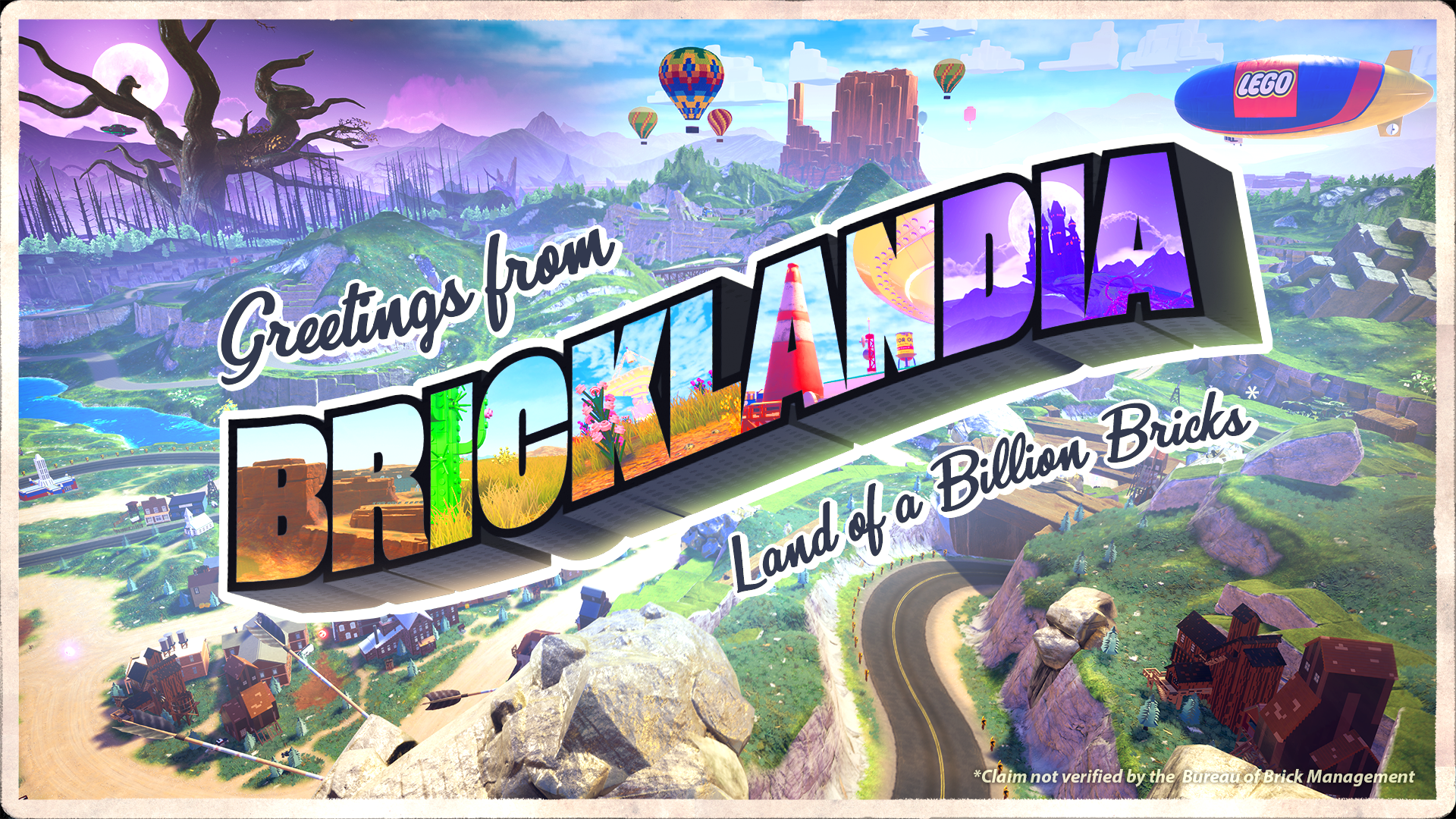
I designed this postcard for the game trailer and as in-world racing billboards along the track, appearing throughout the intro story sequences. It took a lot of tricky Unreal Editor camera work to fly across every biome of the LEGO world, capture the perfect angles showcasing each key location, then assemble them geographically-correct into one composition that defined the game's world.
02 — Wipe Scene Construction
Built in Cinema 4D.
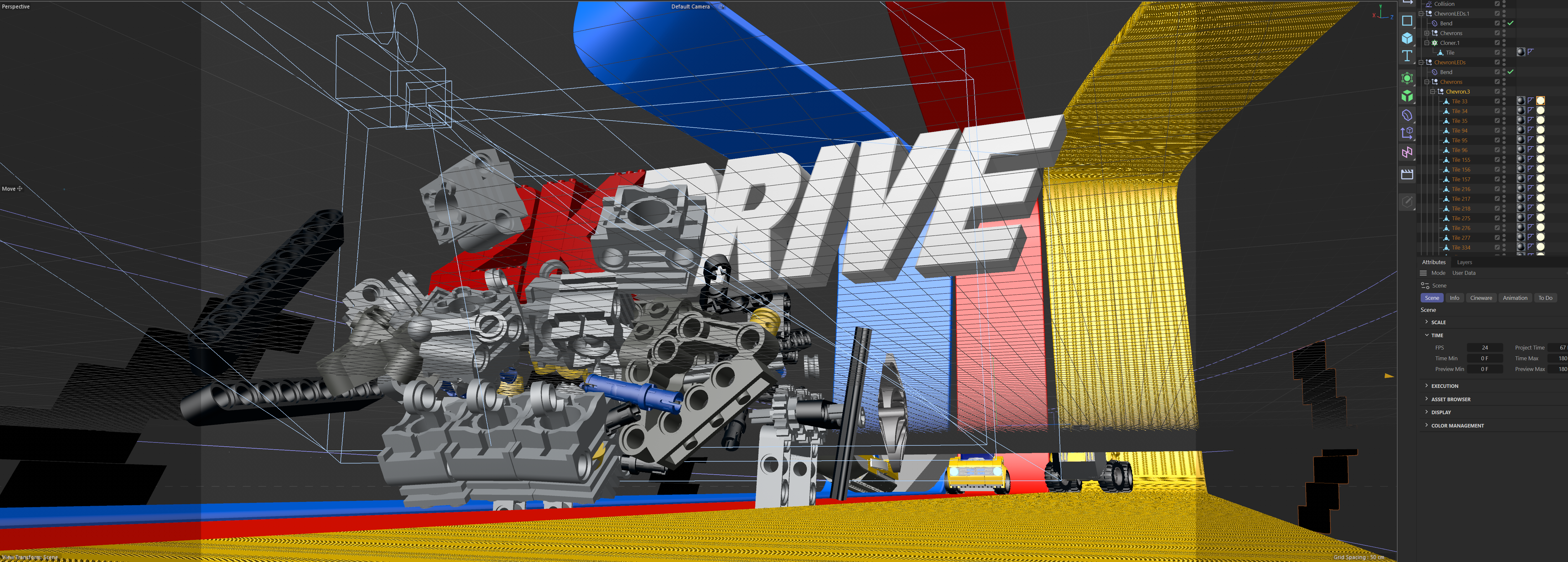
The wipe is a long-form 3D loading transition I designed end-to-end — lighting, environment, and a fully animated scene assembling the 2K Drive LEGO logo and engine from official LEGO blocks, with rigid-body collisions driving the body's motion.
03 — DrivePass UX
Tiers, flows, and the logomark that came with them.
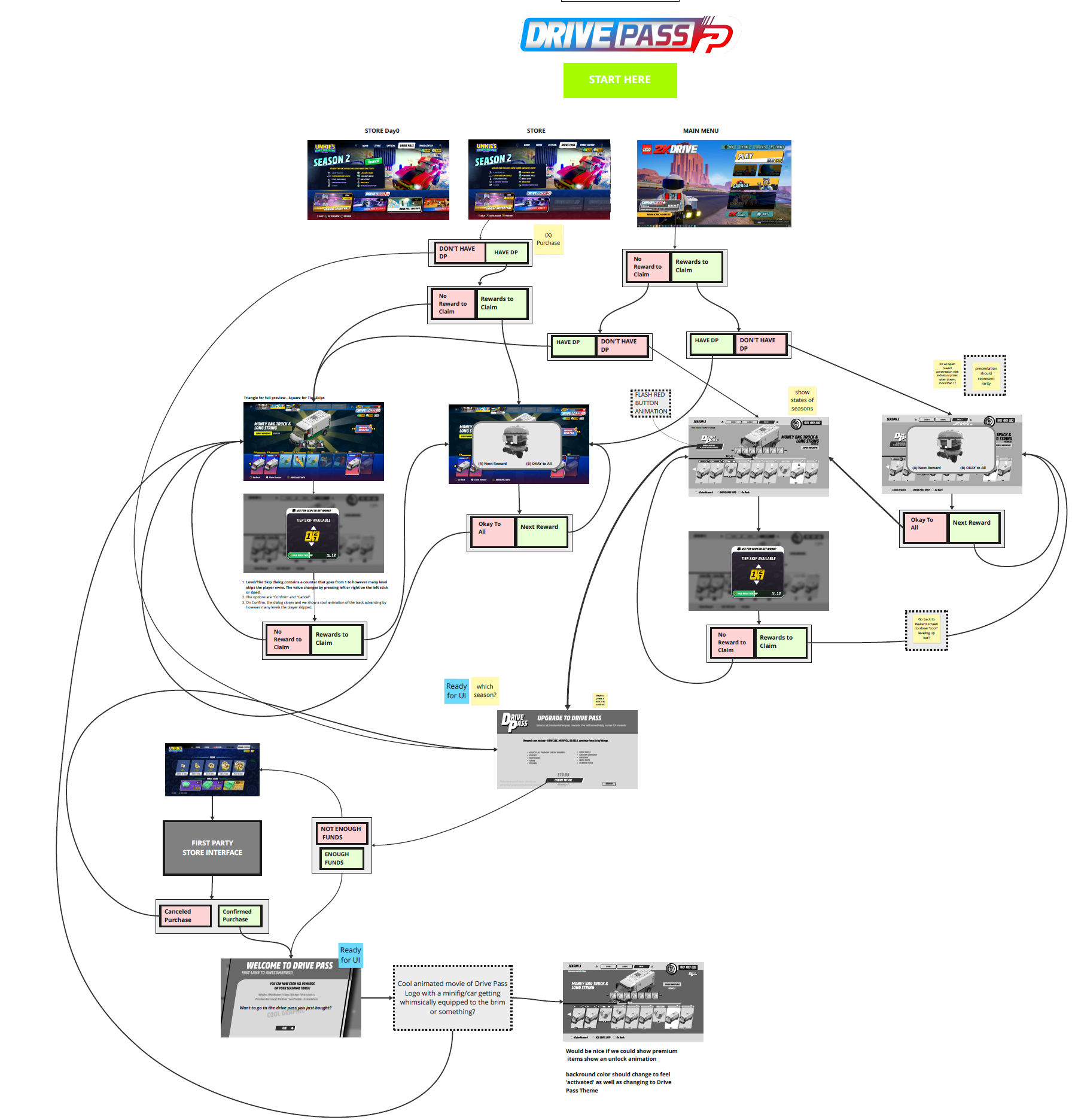
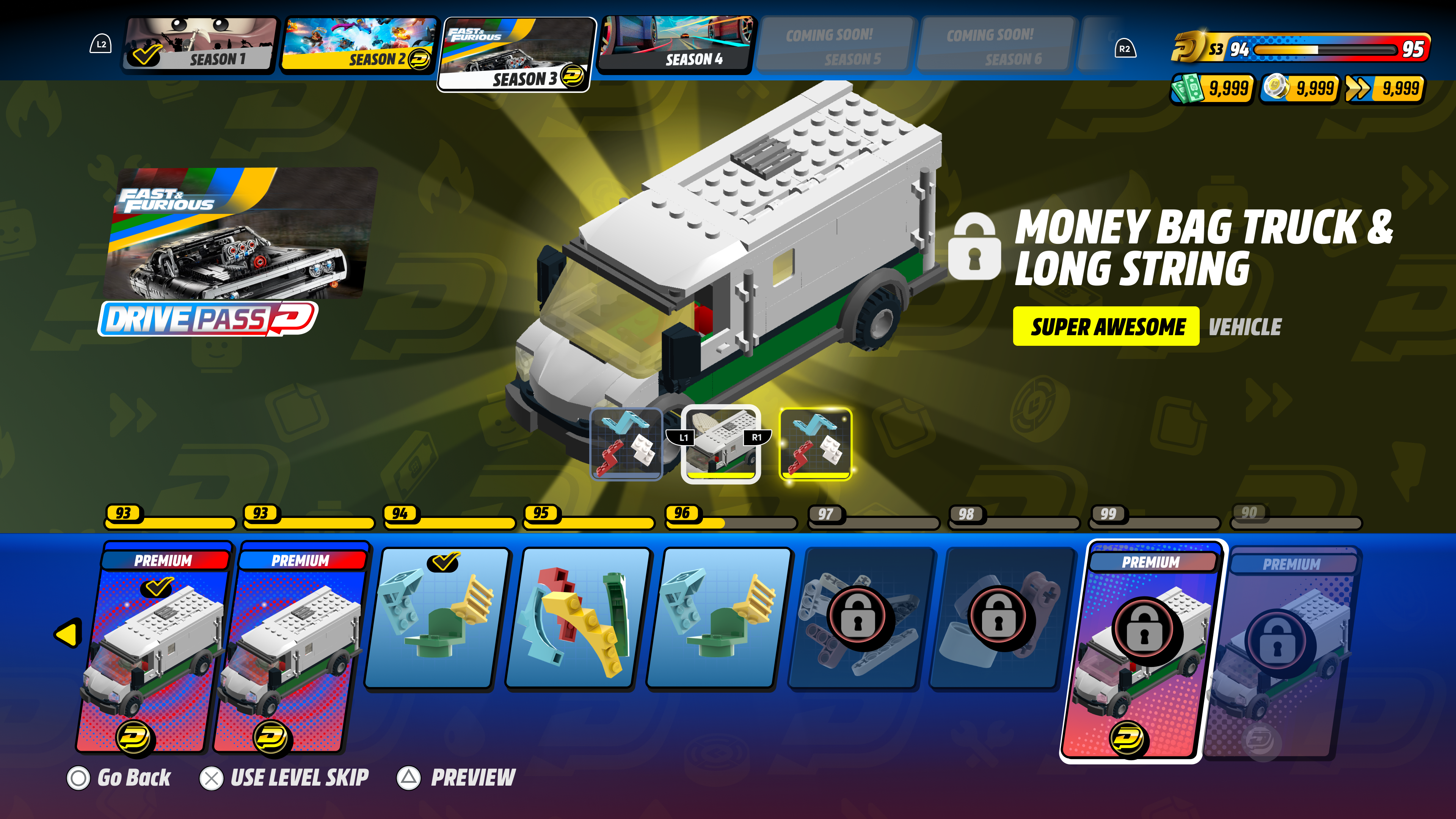
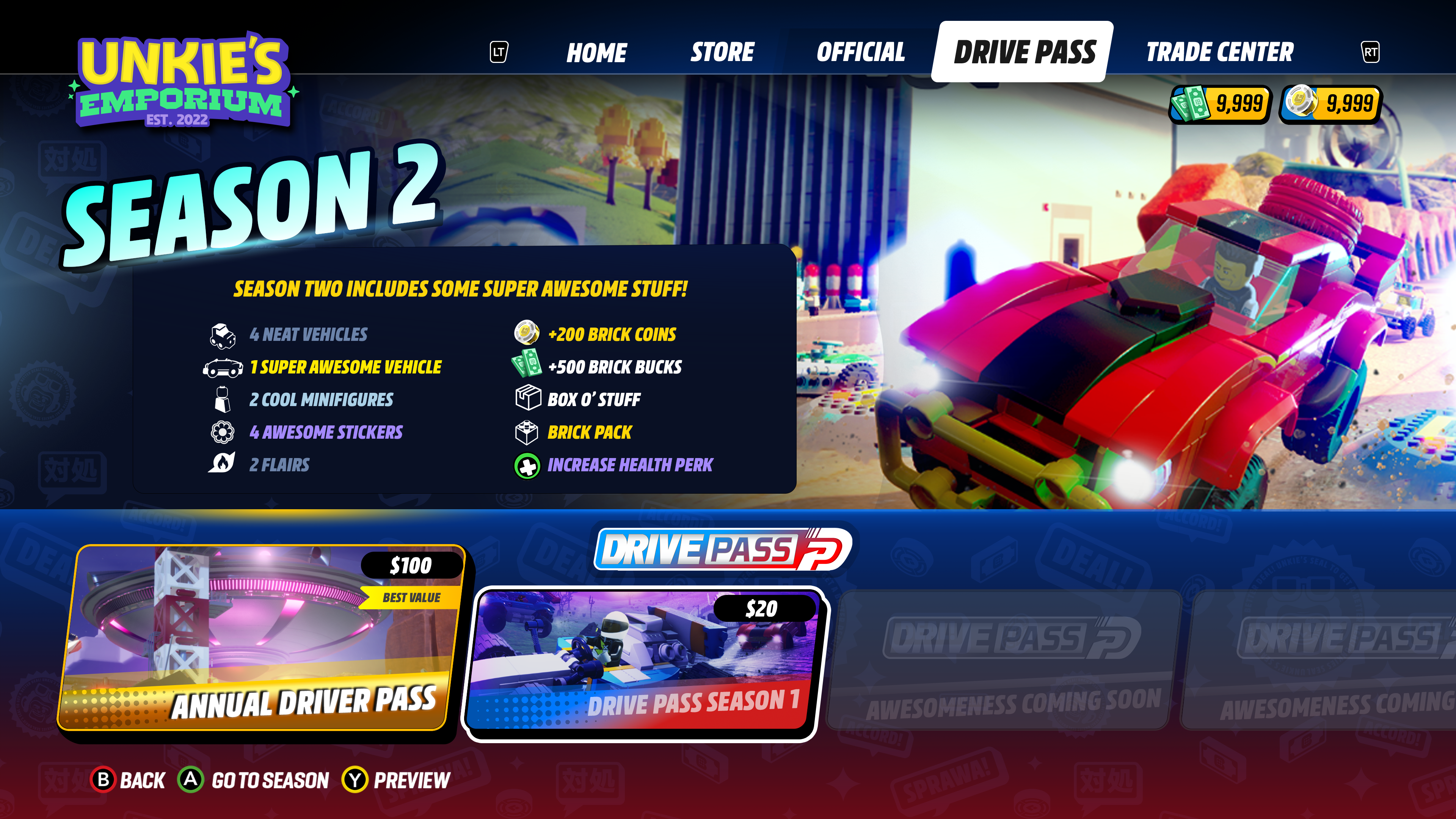
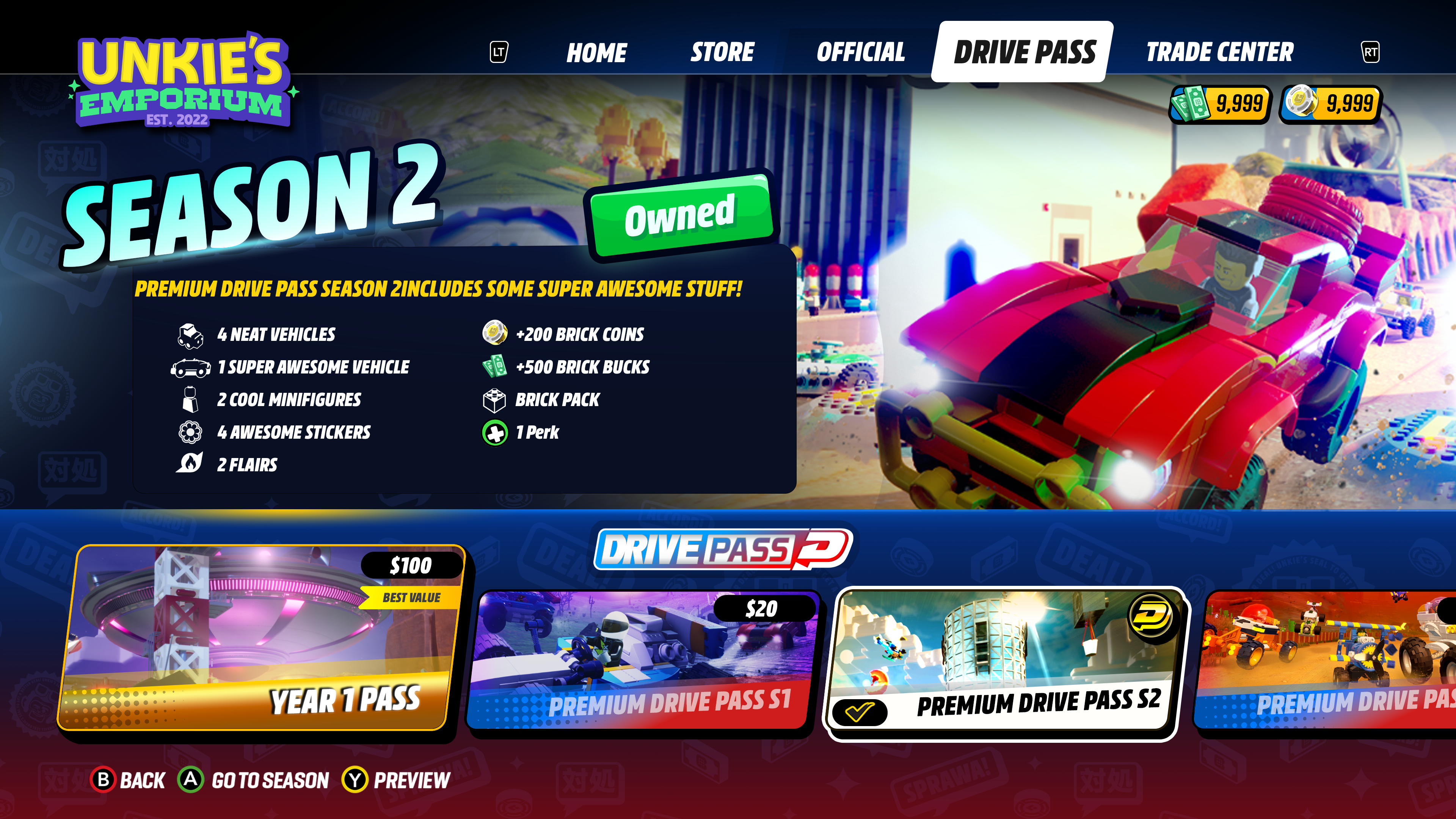
I owned UX for the game's seasonal update portal — mapping logic flows for every user tier ownership state, level speed-ups, and purchase paths. While in there, I also designed the DrivePass logomark itself; after just a few tweak rounds it was approved and implemented into the game.
04 — DrivePass Final UI
Free, Premium, day-zero, and live.
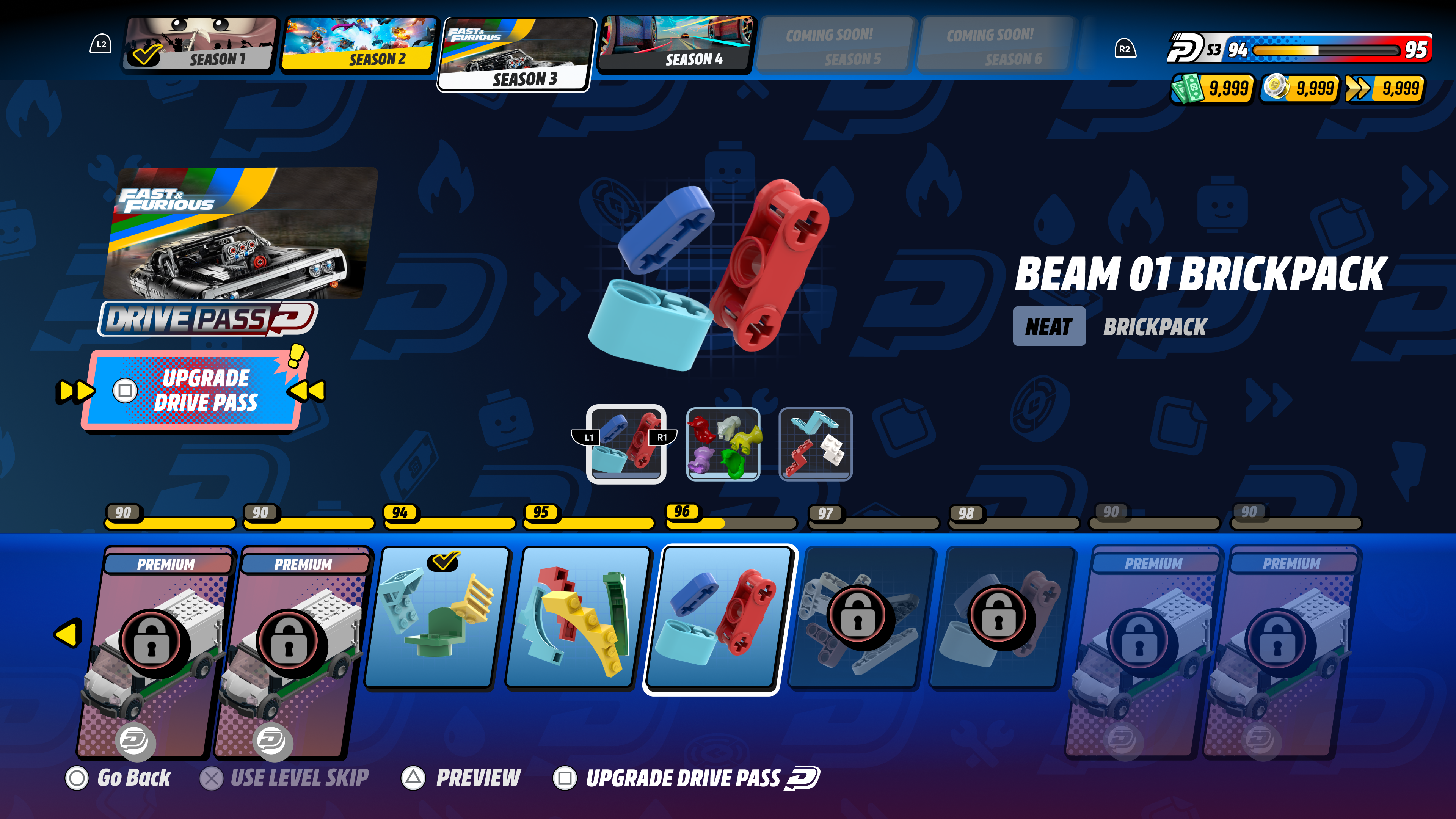
05 — Branding · Racing 101
Mark for the tutorial.
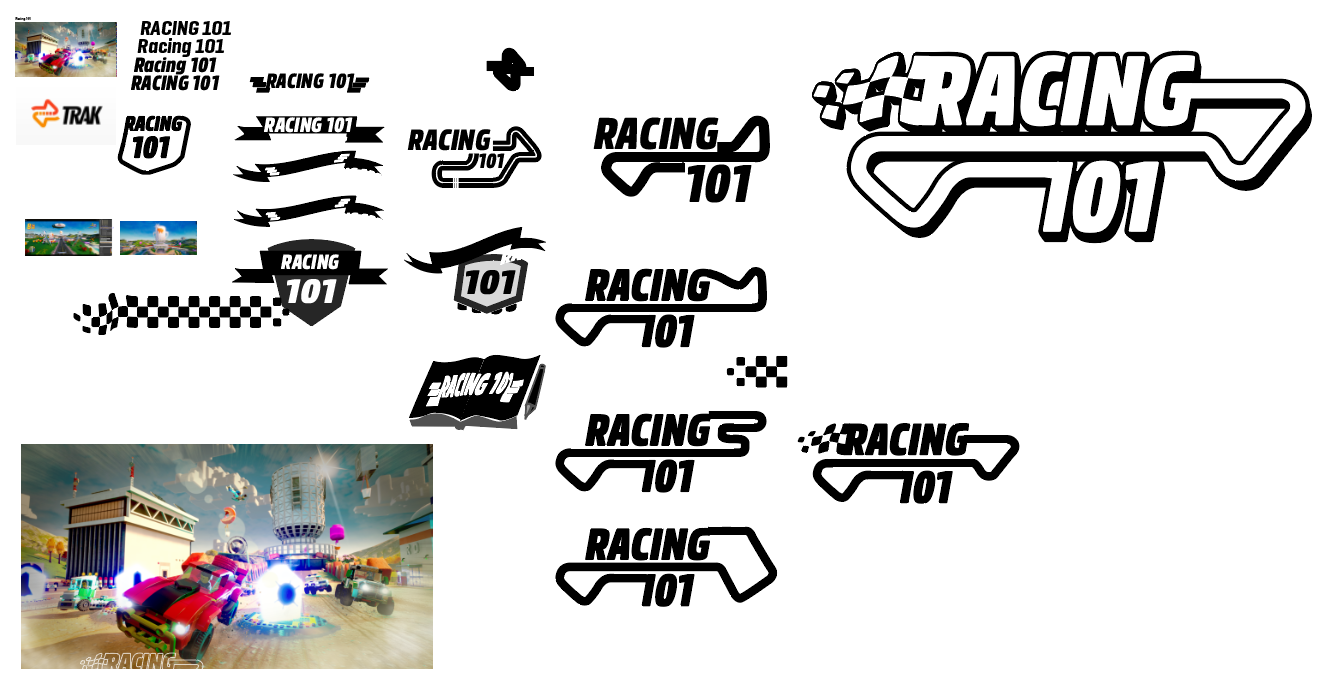
Logomark designed for the training tutorial area of the game.
06 — Boost UI
Animated in After Effects.
Hands-on After Effects UI design for the boost states in the open-world LEGO racer — kinetic, layered, and built to read at speed.
From the largest postcard to the briefest boost flash, every piece was approached with a "toy-box" mentality — tactile, modular, and unapologetically LEGO.